Video credit: Centers for Disease Control and Prevention (CDC)
Flag football is fast, exciting, and packed with those little moments parents love to see—big catches, clever jukes, flying flags, and kids sprinting like they have somewhere extremely important to be.
But there is one thing coaches and parents should never treat like a joke: concussion safety.
Although flag football is designed as a non-contact version of football, accidental collisions, falls, and unexpected blows can still happen. That makes youth flag football concussion safety an important part of every practice and game plan.
The original Youth Flag Football HQ article highlighted the value of learning how to recognize concussions, respond correctly, and understand return-to-play guidance. Modern guidance from the CDC adds an especially important point: a child with a suspected concussion should be removed from sports immediately and should not return the same day until evaluated and cleared by a healthcare provider. Read the CDC’s current concussion response guidance.
So, how can parents and coaches make the game safer without turning every practice into a medical seminar? Here are practical steps that actually make sense on a football field.

Photo credit: The Elite Zone
1. Teach Kids That “No Contact” Does Not Mean “No Risk”
One of the biggest mistakes adults can make is assuming that flag football is automatically injury-proof.
It isn’t.
The beauty of flag football is that players don’t need traditional tackling to enjoy the sport. USA Football describes flag football as a non-contact game experience, with rules designed around skills rather than tackling. Still, players run at high speed, change direction suddenly, and compete for the same space.
That means children should learn a simple rule from day one: play aggressively for the ball, not aggressively against another player.
Review the league’s flag football rules and basic terminology before the season starts. Knowing what is allowed—and what isn’t—can prevent plenty of avoidable contact.
2. Make Safe Flag Pulling a Skill, Not an Afterthought
A good defensive player doesn’t need to launch himself at a runner. In fact, that is exactly what coaches should discourage.
Teach players to approach under control, stay aware of where the runner is going, and focus on removing the flag rather than reaching wildly from behind.
This is where regular practice becomes incredibly useful. The basic flag football skills guide includes dedicated work on flag pulling, while the youth flag football drills section provides additional practice ideas.
Think of it like learning to ride a bicycle. You don’t wait until a busy street to teach balance. You practice the skill in a controlled setting first.
3. Warm Up Before the First Snap
Kids are wonderfully enthusiastic. Tell them practice starts in five minutes and suddenly they can sprint at approximately rocket-launch speed.
That enthusiasm needs direction.
A short dynamic warm-up can prepare players for running, cutting, catching, and changing direction. High knees, light jogging, arm movements, controlled footwork, and age-appropriate mobility exercises are simple places to start.
The Youth Flag Football HQ offensive drill guide also uses a dynamic warm-up before skill work.
The key is not making warm-ups boring. Turn them into a challenge, a relay, or a quick team competition. Safety is easier to teach when kids are actually having fun.
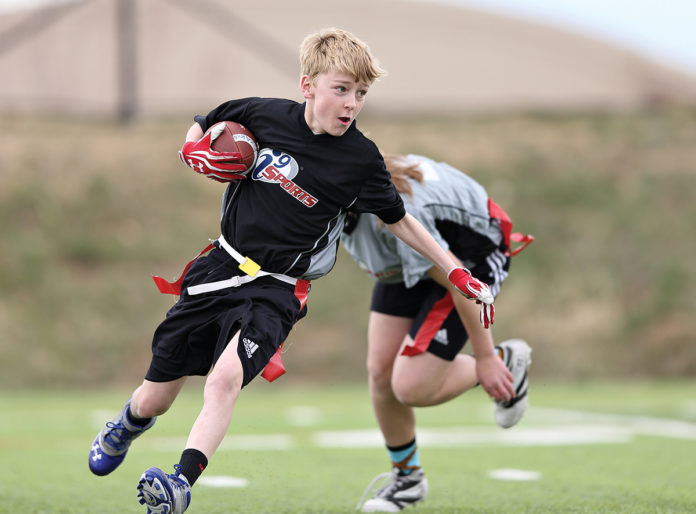
Photo credit: Frisco Style
4. Give Players the Right Equipment
Good equipment doesn’t make a child invincible, but appropriate equipment matters.
Depending on the league, a young player may need a mouthguard, properly fitted footwear, a flag belt, and other approved equipment. Requirements vary, so always check the rules of the specific league.
For example, some youth programs require mouthguards during both practices and games. The youth flag football equipment guide explains why basic protective equipment deserves attention.
A mouthguard is particularly useful for protecting the mouth and teeth during accidental contact. However, parents should not treat a mouthguard—or any piece of equipment—as a guarantee against concussion.
Need help choosing one? The Mogo flavored mouthguard review is another resource worth checking out.
5. Check the Field Before Practice Begins
Sometimes injury prevention has nothing to do with football technique.
Look around.
Are there holes in the grass? Wet patches? Uneven turf? Objects near the sidelines? Are cones or equipment sitting where players could trip over them?
A thirty-second field inspection can be one of the smartest habits a coach develops.
Also pay attention to weather. Extreme heat, slippery surfaces, poor visibility, or severe storms may require practices to be modified or postponed.
USA Football’s current Health & Safety resources include guidance on heat, hydration, emergency planning, injury recovery, and concussion recognition.
6. Teach Kids to Report Symptoms
This is huge.
Some children are reluctant to tell an adult they feel strange because they don’t want to leave the game. Others may worry that their teammates will think they are weak.
Make reporting symptoms normal.
Tell players that speaking up isn’t quitting. It is smart teamwork.
A child who says, “My head hurts,” “I’m dizzy,” “I feel confused,” or “Something doesn’t feel right” deserves attention—not a motivational speech about toughness.
The CDC notes that concussion symptoms can vary from child to child and may not appear immediately. They can also change during recovery. See the CDC’s concussion signs and symptoms guide for details on what parents and coaches should watch for.
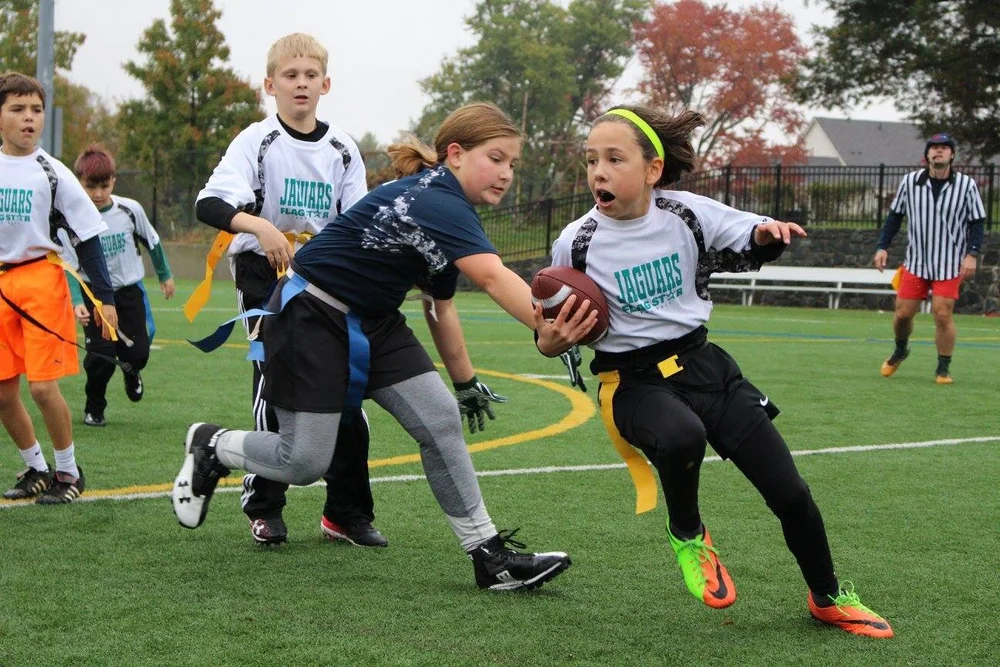
Photo credit: Flag Star Football
7. Know the Common Signs of a Concussion
You don’t need to become a doctor to recognize that something may be wrong.
After a bump, blow, or jolt, watch for signs such as a child appearing confused, dazed, unusually clumsy, or unable to respond normally. Children may also report headaches, dizziness, nausea, vision problems, trouble concentrating, unusual tiredness, or feeling “foggy.”
And remember: a child doesn’t need to lose consciousness to have a concussion.
Some symptoms can develop later, which is why parents should continue paying attention after the game rather than assuming everything is fine because the child walked off the field smiling.
Danger Signs Need Immediate Attention
Certain symptoms require emergency medical attention. These can include repeated vomiting, seizures, worsening severe headache, increasing confusion, difficulty waking, weakness or numbness, slurred speech, or other serious changes.
When in doubt, seek professional medical help. A coach should never attempt to diagnose a concussion on the sideline.
8. Never Let a Suspected Concussion Become a “Walk It Off” Situation
This is one of the most important rules in the entire article.
Suspected concussion = remove the player from participation.
According to current CDC guidance, an athlete suspected of having a concussion should be removed from sports right away, checked for danger signs, and kept out of sports on the day of the injury until evaluated and cleared by a healthcare provider.
In other words, there is no prize for winning the “I can keep playing while injured” competition. In fact, there shouldn’t be such a competition in the first place.
9. Take Return-to-Play Seriously
Feeling better is encouraging. It does not automatically mean a young athlete is ready to jump back into a game.
Return to sports after concussion should follow medical guidance and a gradual progression. The player should advance through the process only as appropriate and should stop and consult their healthcare provider if symptoms return.
USA Football also provides a six-step return-to-play progression as part of its health and recovery resources.
Parents can continue building a strong foundation for their child’s development with the youth flag football conditioning guide, while remembering that recovery always comes before performance.

Photo credit: i9 Sports
10. Build a Smarter Practice, Not Just a Harder Practice
More running does not automatically equal better coaching.
A well-organized practice gives young players opportunities to develop technique without creating unnecessary chaos.
Start with movement and fundamentals. Add passing, receiving, routes, and flag pulling. Increase complexity gradually. Give players breaks. Keep instructions clear.
The youth flag football playbook can help coaches structure game concepts, while the site’s flag football drill guide offers ideas for combining offensive and defensive skill development.
The goal isn’t to exhaust ten-year-olds until they look like tiny professional linebackers. The goal is to teach them to play well and safely.
11. Parents and Coaches Need to Be on the Same Team
Player safety works best when adults communicate.
Parents should know the league’s rules, emergency procedures, and who is responsible for handling injuries. Coaches should know which parents to contact and what information is available for each player.
USA Football’s current youth program resources emphasize preparedness, health and recovery, emergency action plans, parent resources, and coach education.
Parents can also use the Youth Flag Football HQ parents’ resource page for additional ideas on rules, equipment, positions, hydration, and youth football safety.
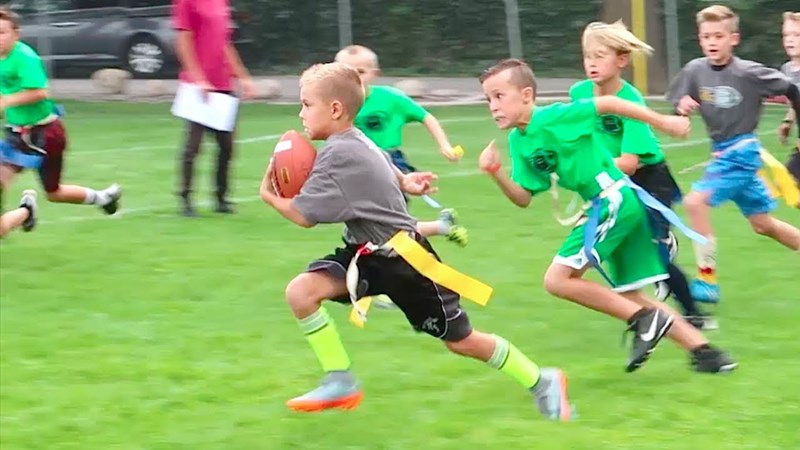
Photo credit: Huntley Park District
What Should a Coach Do Immediately After a Suspected Concussion?
Keep the response simple and organized.
- Remove the player from the game or practice immediately.
- Check for emergency danger signs and seek emergency care when necessary.
- Do not allow the child to return to play that day unless appropriately cleared according to current medical guidance.
- Inform the parent or guardian and arrange medical evaluation.
- Record what happened, including the type of impact and symptoms observed.
Most importantly, don’t try to make a sideline diagnosis. A healthcare professional should evaluate a possible concussion.
How Can Parents Reduce Youth Flag Football Injury Risk at Home?
Safety doesn’t start when the referee blows the whistle.
Parents can encourage regular activity, proper sleep, hydration, sensible nutrition, and basic skill practice. Even a few minutes of easy throwing and catching can help a child become more comfortable with the ball.
You can also explore the youth football sizing guide to make sure practice equipment is appropriate for the player.
And when you need something fun rather than another serious drill, try the flag football games for kids. Safe practice doesn’t have to feel like homework wearing cleats.
The Goal Is Safe, Confident, Happy Players
Concussion prevention isn’t about making youth flag football scary. Quite the opposite.
When coaches teach good technique, parents understand the warning signs, players know they can speak up, and everyone takes injuries seriously, kids can focus on what youth sports are supposed to provide: movement, friendships, confidence, teamwork, and plenty of moments worth cheering about.
Flag football should create memories—not unnecessary medical dramas.
The best safety culture is one where every child knows three simple things: play smart, speak up, and never hide an injury.