Video credit: I Know Football / YouTube — “MoGo M3 Mouthguard Review – Ep. 109.”
A mouthguard isn’t exactly the most exciting piece of youth flag football equipment.
Ask most kids what they want to wear on game day and they’ll probably mention a jersey, cool cleats or something that makes them look like the fastest player on the field.
“Mouthguard” probably won’t be at the top of that list.
That’s where MoGo Sport tried something clever: make the mouthguard itself more enjoyable to wear by adding flavor.
The idea sounds almost too simple. Kids don’t like the plain plastic taste, so why not give the mouthguard a flavor?
Apparently, MoGo asked exactly that question.
The company developed mouthguards with flavor incorporated into the material rather than simply spraying flavor onto the surface. The concept was designed to make athletes more willing to keep the guard in their mouths during practices and games.
That’s particularly interesting for youth flag football, where a player may not always be thrilled about wearing protective equipment.
But does the flavor gimmick actually make a difference? Is the MoGo M1 or M3 comfortable? How does it fit? What flavors are available? And, most importantly, is it an appropriate choice for your child?
Let’s take a closer look.
What Is the MoGo Flavored Mouthguard?
MoGo Sport created what it marketed as the world’s first flavored sports mouthguard.
The core idea is surprisingly straightforward: the flavor is embedded into the plastic rather than applied as an external coating.
MoGo’s product materials describe its guards as using flavor technology designed to keep the taste present from game to game rather than disappearing immediately after the first use.
The older MoGo M1 was available in youth and adult sizing, while the M3 Performance Series was designed as a more advanced, lower-profile model for older athletes.
The M3 design used a harder outer layer with a softer inner layer and incorporated a bite plate to improve durability.
That’s a much more interesting design than simply taking a normal mouthguard and spraying it with artificial flavor.
Why Would a Flavored Mouthguard Matter?
Here’s the real problem MoGo was trying to solve.
A mouthguard only helps when the athlete actually wears it.
A child who constantly removes the mouthguard between plays isn’t getting the same benefit as a child who keeps it properly fitted in place.
MoGo’s original marketing focused heavily on this behavior. The idea was that flavor could make the mouthguard more pleasant and encourage athletes to keep it in their mouths.
And for parents, that is probably the most interesting part.
You’re not really buying “strawberry flavor.”
You’re buying the possibility of making an otherwise unpopular piece of protective equipment a little less annoying.
Youth Flag Football HQ also highlights mouthguards as an important part of youth flag football equipment, noting that accidents can still happen even though flag football is designed with less contact than tackle football.
Check out the site’s youth flag football equipment and safety guide for more information.
MoGo Flavored Mouthguard Review: First Impressions
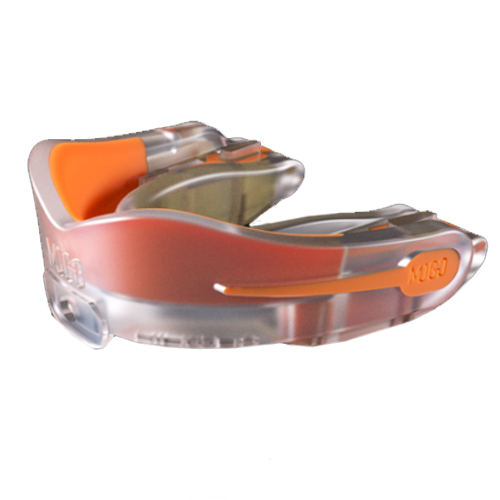
At first glance, MoGo looks different from the anonymous clear mouthguard sitting at the bottom of many children’s sports bags.
The colored inner section gives the guard some personality, while the transparent outer material makes the construction visible.
That visual difference may sound minor, but kids care about things that adults sometimes completely overlook.
If a piece of equipment looks cool, they’re often much more willing to use it.
And when it comes to protective equipment, willingness matters.
MoGo M1 vs. MoGo M3: What’s the Difference?
The M1 and M3 are not simply two different flavors of the same design.
MoGo M1
The M1 was the original performance flavored mouthguard concept.
It was offered in youth and adult sizes and focused on a combination of comfort, protection, breathability and flavor.
The M1 was available with a quick-release tether and a protective case on certain packages.
MoGo M3
The M3 moved the design further toward performance-oriented use.
Its construction used a harder outer layer and softer inner layer, with a lower-profile shape designed to make it less bulky in the mouth.
MoGo’s design partner, Priority Designs, describes the M3 as having a three-piece construction that includes a rigid bite plate and specialized flavor passages.
The company also describes the M3 as approximately 25 percent thinner than competitive mouthguards at the time of development.
That lower profile was intended to help with breathing and speaking while keeping the protective structure intact.
For younger children, however, the standard M1 youth version may be more relevant than the M3, because current product listings for the M3 generally describe it as an adult model for older athletes.
What Flavors Does MoGo Offer?
Flavor is obviously MoGo’s headline feature, so let’s talk about it.
MoGo mouthguards have been offered in a variety of flavors, including:
- Fruit Punch
- Strawberry Lemonade
- Grape
- Orange
- Mint
- Bubble Gum
- Raspberry
- Blue Raspberry and berry variations on selected products
Availability varies by model and retailer.
Some older listings show several flavor options, while current availability can be inconsistent because MoGo products are not carried as widely as mainstream mouthguard brands.
In other words, your child’s favorite flavor might be available one month and mysteriously disappear the next.
Welcome to shopping for niche sports equipment.
Does the MoGo Mouthguard Actually Taste Good?
This is where things get personal.
Flavor is subjective, and the intensity can change with use.
Some product descriptions emphasize long-lasting flavor because it is infused into the material. However, consumer feedback across older listings has been mixed, with some users loving the flavor and others saying it became weaker after repeated use.
That’s not necessarily a deal-breaker.
Think of it like chewing gum. Your first few minutes can be much more intense than the final stretch.
The important question is whether the flavor makes the child more willing to wear the mouthguard.
If the answer is yes, MoGo has accomplished something useful.
How Does the MoGo Mouthguard Fit?
Fit may actually be more important than flavor.
A mouthguard that tastes fantastic but constantly falls out is not doing anyone much good.
MoGo’s traditional boil-and-bite models are designed to be fitted by heating the guard and molding it to the athlete’s teeth.
The M3’s softer inner tray was specifically designed to help create a more personalized fit.
A properly fitted mouthguard should remain securely positioned without requiring the athlete to constantly bite down to keep it in place.
Basic Fit Checklist
- The mouthguard should stay in place during normal movement.
- The child should be able to breathe comfortably.
- It should not create painful pressure points.
- The athlete should be able to communicate reasonably well.
- The guard should not interfere with normal jaw movement.
If the guard doesn’t fit correctly after molding, follow the manufacturer’s instructions rather than simply accepting a poor fit.
Is MoGo Comfortable for Youth Flag Football?
Comfort is one of MoGo’s strongest selling points on paper.
The M3 was specifically designed to reduce bulk inside the mouth while maintaining its protective structure.
For youth players, that’s important.
Kids are not famous for politely tolerating uncomfortable equipment.
Ask a child to wear uncomfortable cleats for two hours and you’ll receive a detailed technical report involving at least seven complaints and possibly tears.
A mouthguard is no different.
The lower-profile design of the M3 is intended to give the athlete more room for speech and breathing than a bulky stock guard.
Does a Flavored Mouthguard Help With Dry Mouth?
MoGo has historically marketed its flavor system as a way to improve the mouthguard-wearing experience and reduce the unpleasant dry feeling some athletes associate with wearing a guard.
However, parents shouldn’t treat the product as a medical solution for dry mouth.
During sports, children can become dehydrated for many reasons, particularly in hot weather. Regular hydration is far more important than choosing a flavored mouthguard.
You can find more youth-specific guidance in Youth Flag Football HQ’s youth flag football hydration guide.
Is MoGo Safe for Kids?
MoGo’s product information has described its materials as BPA-free, latex-free and compliant with applicable FDA material requirements.
Several older product listings also describe natural flavor ingredients and food-contact compliant resins.
However, parents should distinguish between material compliance and a guarantee that any individual child will tolerate a particular product perfectly.
Children can have sensitivities or allergies to various materials, so the product should be checked carefully against your child’s individual needs.
Also, the age range matters.
Older MoGo M3 listings commonly specify adult sizing for athletes around age 11 and older, while traditional MoGo youth versions were intended for younger players.
Always check the current sizing information for the exact model before buying.
Can Kids With Braces Use a MoGo Mouthguard?
This is one area where you need to pay close attention.
Many standard MoGo listings explicitly state that the mouthguards are not designed for braces.
That means you should not assume a normal MoGo boil-and-bite mouthguard is appropriate for a child with orthodontic hardware.
If your child wears braces, speak with the orthodontist or dentist about the correct type of sports mouthguard.
Don’t improvise here.
Teeth are considerably harder to replace than mouthguards.
How Does MoGo Compare With a Cheap Mouthguard?
This is where the original Youth Flag Football HQ review was especially interesting.
The review compared the MoGo mouthguard with a cheaper mouthguard so parents could see differences in design and fit.
The point wasn’t simply that expensive is better.
It’s that mouthguards can have very different constructions even when they look similar from a distance.
| Feature | Basic Stock Guard | MoGo M1/M3 Concept |
|---|---|---|
| Flavor | Usually none | Embedded flavor technology |
| Fit | Varies | Boil-and-bite fit |
| Profile | Varies | Lower-profile M3 design |
| Tether | Depends on model | Available on many MoGo models |
| Case | Depends on model | Included with selected packages |
MoGo M3 Design: What Makes It Different?

The M3 design is particularly interesting from an engineering standpoint.
Priority Designs, the firm involved in its development, describes several features intended to address common mouthguard complaints.
Lower Profile
The M3 was designed to be thinner than competing mouthguards of its time.
Hard Outer Layer
The outer structure provides additional stiffness and protection.
Soft Inner Layer
The softer material helps with molding and comfort.
Bite Plate
A rigid internal bite plate was designed to improve durability and reduce the chance of biting through the guard.
Flavor Passages
The design incorporates passages intended to allow moisture to move through the guard while helping deliver flavor into the mouth.
It’s a surprisingly sophisticated little piece of plastic.
And yes, that sentence is probably not something you expected to read in a mouthguard review.
Does the Tether Matter?
Absolutely.
A quick-release tether can make it easier to keep track of the mouthguard, especially for younger players.
Without a tether, a mouthguard has approximately fourteen possible destinations at practice:
- The grass
- The sideline
- A helmet
- A glove
- A water bottle
- A teammate’s equipment bag
- Some mysterious location nobody can explain
And somehow the mouthguard always chooses the grossest one.
MoGo’s tether system gives players another option and can reduce the chances of the guard being misplaced between plays.
How Should You Clean a MoGo Mouthguard?

A mouthguard spends a lot of time in a warm, moist environment.
So yes, cleaning it is important.
After Every Practice or Game
Rinse the mouthguard with cool or lukewarm water and clean it according to the manufacturer’s instructions.
Before Storage
Allow the guard to dry before placing it in its protective case.
Don’t Leave It in the Sun
Don’t bake the mouthguard on the dashboard of a car.
Your vehicle’s dashboard can become extremely hot, and excessive heat can alter the shape of thermoplastic materials.
Check It Regularly
Look for cracks, tears, deformation or excessive chewing damage.
A damaged mouthguard should be replaced rather than “patched up” with optimism.
How Often Should a Youth Mouthguard Be Replaced?
There isn’t one universal replacement schedule for every child.
Instead, monitor fit, wear and growth.
Young children may outgrow a mouthguard even when it still looks perfectly fine.
Active athletes may also chew through or damage a guard faster than expected.
Replace the mouthguard when:
- It becomes damaged.
- The fit changes.
- The child outgrows it.
- It becomes excessively worn.
- It no longer stays securely in place.
Youth Flag Football HQ’s newer equipment guidance also recommends replacing damaged mouthguards and checking fit rather than simply continuing to use an old guard.
Is a Flavored Mouthguard Worth It for Youth Flag Football?
This comes down to one simple question:
Will your child actually wear it?
If the answer is “yes, because it tastes like bubble gum,” that’s a pretty compelling reason to consider one.
The flavor itself isn’t the main benefit.
Compliance is.
A mouthguard sitting in a sports bag protects approximately zero teeth.
A properly fitted mouthguard being worn during play is a completely different story.
MoGo Mouthguard Pros and Cons
Pros
- Flavored design makes the product more fun for kids.
- Flavor is incorporated into the material rather than simply sprayed on the surface.
- Available in youth and adult versions depending on model.
- M3 offers a lower-profile performance design.
- Quick-release tether available on many models.
- Several flavors have been offered.
- BPA-free and latex-free construction is listed by product sellers.
- Can be molded for a more personalized fit.
Cons
- Some versions are difficult to find today.
- Flavor intensity can vary with use and personal preference.
- Some users may find the fit less comfortable than expected.
- Standard models are not designed for braces.
- M3 is aimed at older athletes rather than small children.
- Availability varies substantially between retailers.
MoGo vs. a Custom Dentist-Fitted Mouthguard
There is another important distinction parents should understand.
A boil-and-bite mouthguard like MoGo is not the same thing as a dentist-made custom mouthguard.
A custom guard is made specifically from an impression of the athlete’s teeth.
That’s obviously more personalized.
But it can also be considerably more expensive.
For a child playing recreational youth flag football, a properly fitted consumer mouthguard may be a reasonable option when permitted by the league.
For a child with braces, unusual dental anatomy or specific dental concerns, a dentist or orthodontist may recommend something different.
You can learn more about the different types of mouthguards through MoGo’s historical materials in its original sports mouthguard information.
What About Flag Football Rules?
Mouthguard requirements can vary between leagues.
Youth Flag Football HQ notes that flag football rules differ between leagues, including equipment requirements.
That means parents shouldn’t assume that because one league requires a mouthguard, every league has exactly the same rule.
Check your child’s current league handbook before buying equipment.
You can also review the flag football rules guide on Youth Flag Football HQ.
Even when a specific practice session doesn’t require a mouthguard, parents may still choose to have the child wear appropriate protective equipment during football activities where there is a risk of facial or dental impact.
Can MoGo Be Used for Other Sports?
Yes. MoGo was not developed exclusively for flag football.
The company has marketed its products for sports including football, hockey, lacrosse, boxing, wrestling and other athletic activities.
That makes sense because the basic goal is the same: protect the mouth while allowing the athlete to breathe and communicate.
Of course, the equipment rules for each sport can be different.
So check the rules of the specific sport and league before using the same mouthguard everywhere.
How Does the MoGo Flavor Actually Work?
This is probably the coolest technical detail in the product.
MoGo’s flavor isn’t intended to sit on the surface like frosting on a cupcake.
The company says its flavor is incorporated into the plastic material itself.
Priority Designs describes the flavor technology as being embedded into the plastic at a molecular level.
The goal is simple: the athlete tastes the flavor as the guard is used, without relying on a coating that can disappear immediately.
That’s what separates the MoGo idea from simply brushing strawberry flavor onto an ordinary mouthguard.
Who Should Buy the MoGo Flavored Mouthguard?
The MoGo concept makes the most sense for a child who:
- Dislikes the taste of ordinary mouthguards.
- Frequently removes the mouthguard during practice.
- Complains that conventional guards feel bulky.
- Likes flavored sports equipment.
- Needs a boil-and-bite option.
- Can use a standard mouthguard under the league’s rules.
It may be less suitable if:
- The athlete wears braces and needs an orthodontic-specific guard.
- The child cannot comfortably retain the guard.
- The exact model doesn’t meet the league’s requirements.
- You want a professionally fitted custom dental mouthguard.
What Parents Should Look for Beyond Flavor
Flavor is the fun part.
But don’t let it become the only buying criterion.
A good youth mouthguard should be:
- Properly sized
- Comfortable
- Securely fitted
- Durable
- Easy to clean
- Suitable for the athlete’s age
- Appropriate for the sport and league
Think of flavor as the bonus feature.
Protection and fit are the main event.
How to Get a Child Excited About Wearing a Mouthguard
Sometimes the hardest part isn’t buying the equipment.
It’s getting your child to actually use it.
Try letting your child choose the flavor.
Explain what the mouthguard is for in simple terms.
Make putting on protective equipment part of the normal pre-practice routine.
And avoid making it into a giant lecture.
“Mouthguard goes in before the game” is much easier for a seven-year-old to remember than a twenty-minute presentation on dental trauma.
For more parent advice, visit the Youth Flag Football HQ parent resources.
Final MoGo Flavored Mouthguard Verdict
The MoGo Flavored Mouthguard is a clever idea that solves a very real youth-sports problem: kids don’t always enjoy wearing mouthguards.
The flavor is the attention-grabber, but the more interesting features are the fit, low-profile design, tether options and construction differences between the M1 and M3.
For younger youth flag football players, a correctly sized MoGo youth model can be an appealing option if it is permitted by the league and fits properly.
For older athletes, the M3’s lower-profile construction makes it particularly interesting.
However, parents should be realistic about availability. MoGo products have become harder to find through mainstream sporting-goods retailers, and many current listings are older or marked unavailable.
That doesn’t make the product concept bad.
It simply means you should check the condition, sizing and authenticity of the exact product before purchasing.
And remember the biggest lesson:
A mouthguard doesn’t protect much if it stays in the equipment bag.
If a fruit-punch, grape or bubble-gum flavor makes your child more likely to keep a properly fitted mouthguard in place, that’s a pretty fun little piece of sports-equipment engineering.
For more youth flag football equipment advice, explore the Youth Flag Football drills collection and learn about the different flag football positions.
Coaches can also explore the youth flag football playbook, while parents can learn more about common flag football terms.
For practice ideas that make young players forget they’re actually conditioning, check out the flag football games for kids.
Safety note: A mouthguard is only one part of youth sports safety. Always follow your league’s current equipment rules, manufacturer instructions and recommendations from your child’s dentist or orthodontist. Children who wear braces or have specific dental concerns should receive individualized guidance from a dental professional.