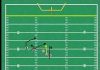
Some youth flag football plays look complicated enough to require a whiteboard, three coaches, and a snack break before anyone understands them.
Twins Outs is not one of those plays.
It is a smart, flexible 5-on-5 flag football play built from the Twins formation. The design gives the quarterback a primary receiver, secondary options, and even a couple of running variations. In other words, it gives a young offense a plan without making the playbook feel like a college exam.
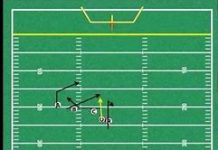
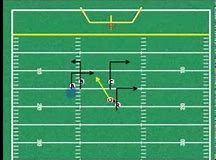
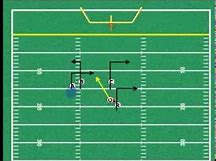
The original Youth Flag Football HQ version lines up two wide receivers together toward one side of the field, with the quarterback under center and the running back positioned 3–4 yards deep on the opposite side. At the snap, the quarterback uses a quick handoff fake before dropping back to pass. The first receiver is the primary target, while the quarterback can progress to the other receiver, center, or running back if needed.
And here’s the fun part: the same formation can also become a handoff or a draw.
That makes Twins Outs more than just another passing play. It becomes a little Swiss Army knife for a youth flag football offense.
What Is the Twins Outs Flag Football Play?
Twins Outs is a 5-on-5 play that uses the Twins flag football formation to create space and give the quarterback several choices.
The two wide receivers line up together near the sideline. They can be placed on either the left or right side of the formation. The quarterback sets up under the center, while the running back starts several yards behind and on the opposite side.
At the snap, the quarterback initially shows the defense a handoff to the running back. That small fake matters because it can make defenders hesitate.
Once the fake is completed, the quarterback drops back and looks for the primary receiver.
If that first option isn’t open, the quarterback moves through the progression rather than forcing the throw. The original play calls for the quarterback to look to the second receiver, then the center, and finally the running back.
That’s a pretty useful lesson for young quarterbacks: you don’t have to make the heroic throw. Sometimes the best decision is the simple one.
Why the Twins Formation Works
The strength of the Twins formation is that it puts two receivers together and makes the defense react to their spacing.
Think of it like putting two magnets near the same side of the fridge. Defenders naturally get pulled toward the action. That can create open grass somewhere else.
The site’s flag football positions guide explains the responsibilities of quarterbacks, receivers, centers, and running backs. Understanding those roles makes a play such as Twins Outs much easier to teach.
Instead of asking every player to memorize random movements, the coach can explain the reason behind each route and movement.
That is when kids start understanding football rather than simply repeating it.
Twins Outs Formation: Where Everyone Lines Up
The Two Wide Receivers
The two receivers line up together near the sideline on either side of the field.
Keeping them relatively close together is important because the formation is designed to make the defense account for both players at once.
Their alignment should be consistent during practice. Young players become much more comfortable when they know exactly where to stand before the snap.
The Quarterback
The quarterback lines up under the center.
This position is especially important because the play relies on timing. The quarterback needs to sell the handoff fake, get back into passing position, and then read the field.
That sounds easy when written down.
Try doing all three while five defenders are sprinting around. Suddenly it feels a little more exciting.
The Running Back
The running back lines up opposite the two receivers, usually 3–4 yards deep.
This gives the quarterback a believable handoff option at the beginning of the play. Later, the running back can also become a short passing outlet.
The basic flag football skills guide is useful for teaching the handoff mechanics before adding the complete play.
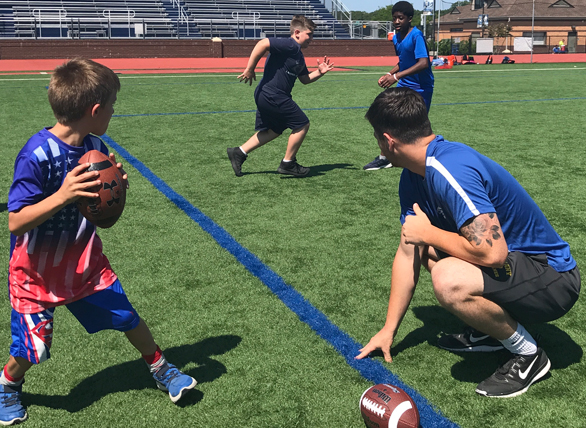
Image credit: Future Stars Camp
How Twins Outs Works After the Snap
Step 1: Sell the Handoff
The quarterback receives the snap and immediately presents the ball toward the running back as though a handoff is coming.
The fake should look believable without turning into a theatrical production.
Young players sometimes overdo fakes. The quarterback doesn’t need to perform an award-winning acting scene. A quick, convincing motion is enough.
Step 2: Drop Back and Read the Primary Receiver
Once the fake has done its job, the quarterback drops back and looks toward the primary receiver.
The main objective is to get the ball out quickly when the receiver is open.
The quarterback should avoid locking onto the receiver before the snap. Defenders love predictable quarterbacks. They’re basically Christmas presents with legs.
Step 3: Move Through the Progression
When the first receiver is covered, the quarterback works through the remaining options.
The sequence is:
- Primary wide receiver
- Second wide receiver
- Center
- Running back
This progression is one of the best teaching features of the play because it helps young quarterbacks understand how to move on from a covered receiver.
For more complete concepts, explore the Youth Flag Football Playbook, which includes Twins Outs along with other 5-on-5 and 6-on-6 options.
Why the Quick Throw Can Be So Effective
Youth flag football is often won with timing, spacing, and decision-making rather than simply throwing the ball as far as possible.
A quick completion can force defenders to move laterally and communicate. Once they start reacting to the short game, deeper opportunities can become available later.
This is also why route running deserves serious attention.
The advanced flag football drill guide includes route-running, pattern recognition, ball handling, and flag-pulling work that can complement the Twins Outs concept.
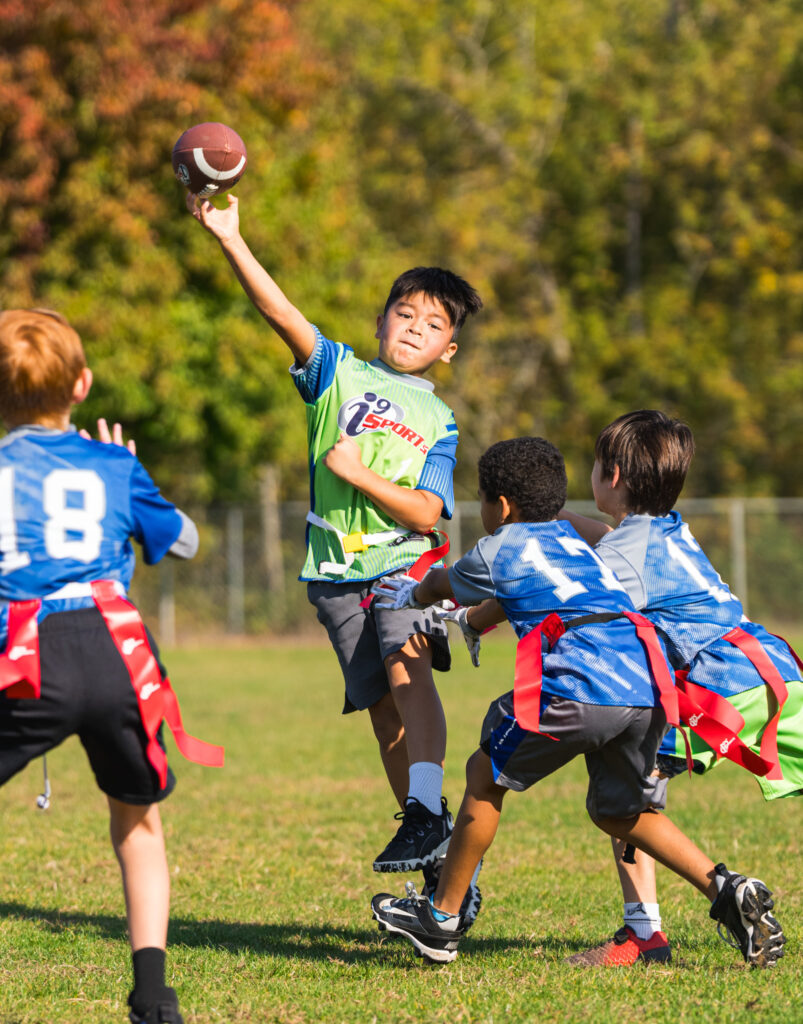
Image credit: i9 Sports
The Center Is Not Just There to Snap the Ball
This is one of the most overlooked parts of the play.
The center can become a short passing option after the main routes develop. The original Twins Outs concept has the center hesitate before moving along the line of scrimmage into the space created by the receivers.
That delay is important.
If the center runs immediately, the route can arrive too early and crowd the other receivers. A small pause allows the first routes to pull defenders away before the center enters the open area.
The center position can be surprisingly valuable in youth flag football. According to the site’s flag football positions resource, the center can become an eligible receiver after the snap under applicable rules.
Don’t Forget the Running Back
The running back has two jobs in this concept.
First, the player helps make the initial handoff fake believable.
Second, the running back becomes a safety valve on the opposite side of the formation.
This is especially handy when the defense collapses toward the two receivers.
Imagine the defense rushing toward one side like everyone just heard the ice cream truck. Suddenly, your running back has space on the other side.
That’s why coaches should teach players to look beyond the primary route.
Turn Twins Outs Into a Running Play
One of the most useful features of Twins Outs is that it doesn’t have to stay a pass every time.
The quarterback can simply hand the ball to the running back and let the runner attack up the middle.
This variation can be helpful when the defense begins cheating toward the wide receivers.
Once defenders start expecting another pass, the handoff can force them to rethink their positioning.
Just make sure the play is legal under your league’s rules. Flag football rules can vary by organization, age level, and format. The Youth Flag Football HQ flag football rules guide covers common variations and penalties.

Image credit: Next Level PA
The Draw Variation: A Sneaky Changeup
The draw is another wrinkle coaches can add once players understand the basic play.
Here, the running back hesitates for a moment while the quarterback performs a pump fake toward a receiver.
The defense sees the quarterback looking downfield and may start reacting to the apparent pass.
Then comes the surprise.
The quarterback turns and hands the ball to the running back, who quickly attacks the middle.
This requires better timing than the standard handoff, so it should not be installed too early with beginners.
Start slowly. Walk through it. Let the quarterback and running back learn the rhythm. Then increase the speed.
The youth flag football drills section offers additional practice ideas that can help players build the fundamentals needed for this type of deception.
How to Practice Twins Outs With Young Players
Practice the Formation First
Before running a full-speed play, put everyone in position.
Ask the players to point out where the two receivers are, where the running back is, and where the quarterback and center line up.
Then rehearse the snap and handoff fake without a defender.
Add the First Read
Next, have the quarterback complete the handoff fake and throw to the primary receiver.
Repeat this until the timing feels natural.
The key is repetition without turning the session into a boring parade of identical plays. Youth Flag Football HQ recommends keeping practices moving and fun while increasing complexity as players improve.
Add Defensive Pressure
Once the offense knows the play, put one defender into the drill.
Give the defender a simple assignment, such as covering the primary receiver.
Now the quarterback has to recognize the coverage and move to the next option.
That small change turns a memorization exercise into an actual football decision.
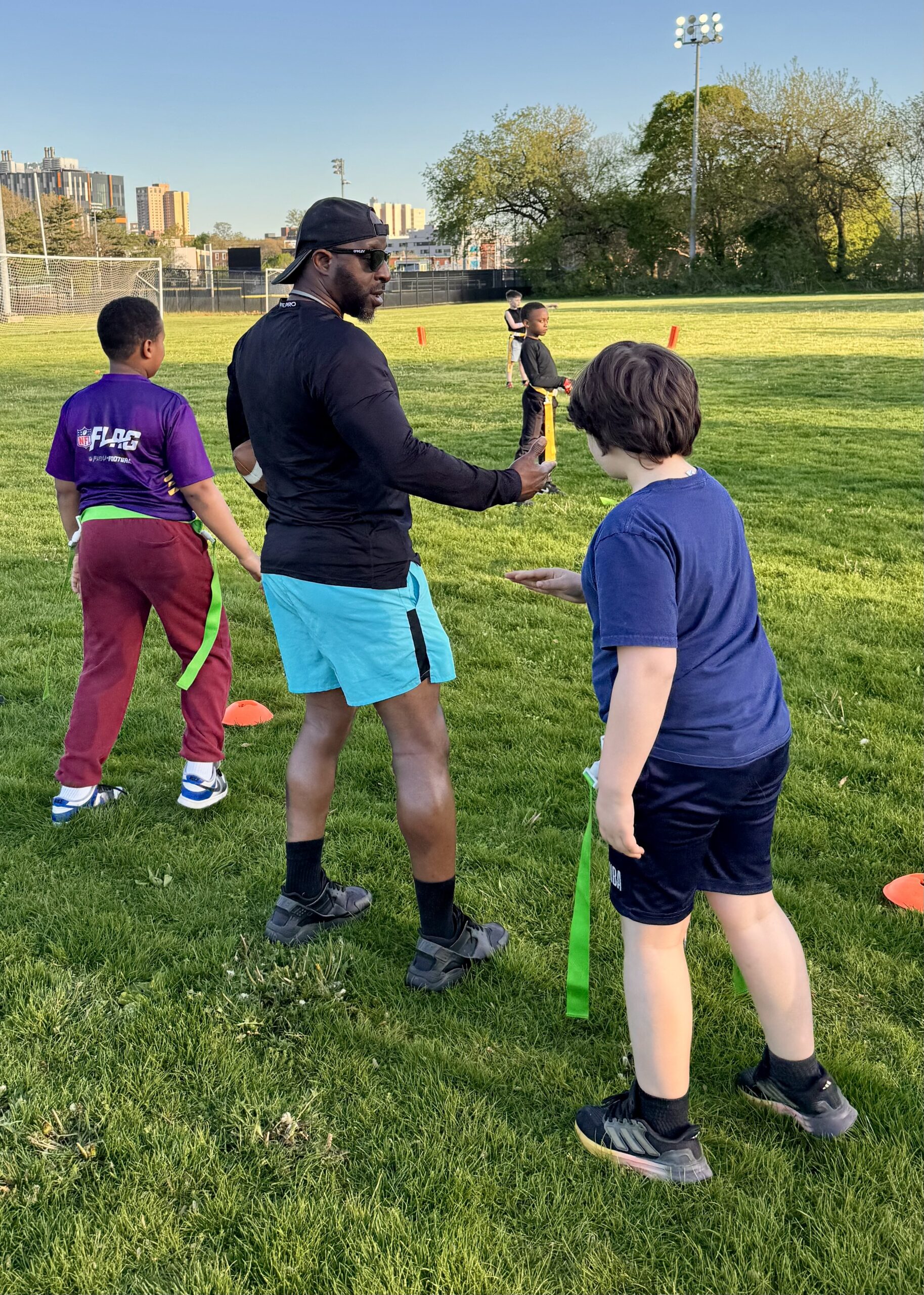
Image credit: Philadelphia Youth Sports Collaborative
Common Mistakes to Fix During Practice
- The handoff fake is too slow: A long fake gives the defense time to recover.
- The quarterback stares at one receiver: Teach the player to scan and move to the next option.
- Receivers bunch together: Good spacing helps create throwing lanes.
- The center moves too early: A short hesitation can help the route develop.
- The running back starts moving too soon on the draw: The timing of the pump fake and handoff must be practiced.
These small corrections can make the play look dramatically cleaner.
Combine Twins Outs With Other Plays
The real value of a formation appears when the defense cannot predict what’s coming.
Once your players understand Twins Outs, compare it with Twins Inside Slants and the site’s other Twins concepts.
Changing the route patterns while keeping a familiar formation can force defenders to read rather than guess.
You can also study the site’s guide to teaching flag football plays for ideas on explaining concepts to younger players.
Coaches looking to sharpen their overall X’s and O’s can also explore USA Football’s Advanced Flag Course, which covers 5-on-5 concepts, route combinations, spacing, coverage adjustments, and practice planning.
Use Games to Reinforce the Skills
Not every minute of practice needs to involve standing in formation and staring at the coach.
Kids learn through play, too.
Try finishing practice with activities from the flag football games for kids collection. Games can reinforce catching, quick movement, flag pulling, communication, and decision-making while giving players a chance to have some fun.
That matters because tired children with bored faces don’t exactly make for championship-level energy.
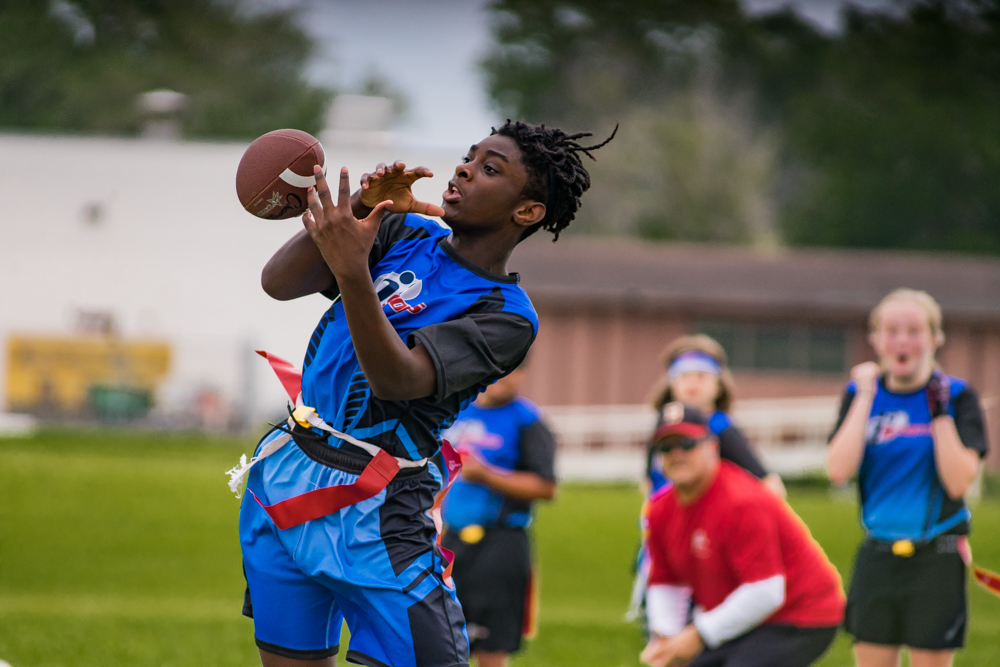
Image credit: i9 Sports
Keep Safety and Fundamentals in the Game Plan
A clever play is useful only when players can execute it safely and confidently.
Coaches should make sure players understand the league’s contact rules, know how to pull flags properly, and practice within an age-appropriate setup.
The flag football injury-prevention guide offers additional reminders about preparation, equipment, hydration, and smart practice habits.
For broader coach education covering athlete well-being, health and safety, flag fundamentals, and practice management, USA Football’s Youth Coach Course is another useful resource.
When Should You Call Twins Outs?
Twins Outs can be especially useful when you want a simple passing concept with multiple answers.
It can make sense when:
- You want a quick pass to the outside pair.
- You want to make defenders respect two receivers on one side.
- You want a built-in short outlet.
- You want the option to switch from pass to handoff.
- You want to teach young quarterbacks how to progress through reads.
It is not a magic play. No play is.
But it gives a young team something even better: structure.
Final Thoughts on the Twins Outs Play
Twins Outs is a terrific teaching play because it combines several important youth flag football ideas into one easy-to-understand package.
Players learn formation spacing. The quarterback learns to use a progression. Receivers learn timing. The center learns that a delayed route can create space. The running back learns how a fake can influence defenders and how a simple handoff can become the perfect changeup.
Start with the basic pass. Get the timing right. Then add the handoff. Once everyone is comfortable, introduce the draw.
Before long, your young offense may start making defenders wonder, “Wait… who’s getting the ball?”
And that little moment of confusion is exactly what a good flag football play is supposed to create.