Video credit: Centers for Disease Control and Prevention (CDC) — HEADS UP to Youth Sports Coaches: Encouraging Safe Play & Concussion Reporting.
Watching your child sprint down a flag football field is exciting.
Watching them come home limping is a very different story.
Flag football is designed as a non-contact version of football, but “non-contact” does not mean “nothing can ever go wrong.” Young athletes can still trip, collide, fall awkwardly, get dehydrated, or suffer a concussion after a bump, blow or jolt.
The good news is that parents and coaches can do a lot to make youth flag football safer.
And no, the solution isn’t wrapping your child in bubble wrap before kickoff.
The best approach is much simpler: choose a well-run program, use appropriate equipment, teach good movement habits, pay attention to the weather, recognize injuries early, and create a culture where kids feel comfortable speaking up.
That last part is huge.
A child should never feel that saying “my head hurts” or “my ankle doesn’t feel right” means they are letting their teammates down.
Why Can Kids Still Get Injured Playing Flag Football?
Flag football removes tackling and blocking from many formats, which can reduce certain contact situations, but athletes still run at speed and compete for the ball and flags.
That means common sports injuries can still happen.
These may include:
- Sprains and strains
- Bruises
- Minor cuts and scrapes
- Ankle and knee injuries
- Falls and collisions
- Heat-related illness
- Concussions and other head injuries
Youth Flag Football HQ’s current injury-prevention guidance emphasizes proper gear, preparation, hydration, attention and responding to aches and pains rather than ignoring them.
Its flag football injury-prevention guide is a useful companion for parents and coaches.
1. Choose an Organized Youth Flag Football Program
One of the easiest ways to improve safety is to start before the first snap.
Choose a league with responsible coaches, clear rules, appropriate supervision and a plan for handling injuries and emergencies.
A good program should not treat safety as an afterthought.

Before signing up, ask a few simple questions:
- Are coaches trained?
- Who supervises practices?
- What equipment is required?
- What happens when a player gets injured?
- How are heat and weather conditions handled?
- What is the league’s concussion policy?
USA Football’s current youth coaching resources include education covering health and safety, concussion response, heat preparedness, hydration and emergency planning.
Parents can also browse the Youth Flag Football HQ parent resources before the season starts.
2. Use the Right Equipment Every Time
Children shouldn’t only wear safety equipment on game day.
Practice can involve just as much running, cutting, catching and falling as a game.
NFL FLAG’s equipment guidance lists items such as a mouthguard, water bottle, cleats and appropriate athletic clothing among the basic equipment considerations for youth flag football.
Depending on the league, requirements can differ.
That’s why parents should always check the current rules instead of assuming every league uses the exact same equipment list.
You can review Youth Flag Football HQ’s flag football gear and equipment guide for a broader overview.
Check Equipment for Wear
Even good equipment eventually wears out.
Inspect mouthguards, cleats, belts and other equipment regularly. Replace anything that is cracked, damaged or no longer fits correctly.
A mouthguard that worked perfectly last season may not fit the same way after a child’s teeth and jaw have changed.
For a closer look at flavored mouthguards, read our MoGo flavored mouthguard review.
3. Teach a Proper Warm-Up Before Practice and Games

Kids are usually ready to play about three seconds after arriving at the field.
Coaches know better.
A short warm-up helps players gradually get ready for activity instead of going from “standing around” to “full-speed sprint” instantly.
For younger players, a warm-up can be simple and fun:
- Easy jogging
- High knees
- Side shuffles
- Skipping
- Dynamic leg movements
- Light jumping
- Flag-pulling games
Raleigh Parks’ 2026 youth flag football practice plans, for example, include dynamic movements and a short warm-up period before skill stations.
Check out Youth Flag Football HQ’s youth flag football drills for warm-up and practice ideas.
4. Teach Children How to Move Safely
A surprising amount of injury prevention comes down to learning how to move.
Young players should practice accelerating, stopping, changing direction and landing under control.
That doesn’t require an expensive training facility.
A few cones and a small open area can do plenty.
Useful Movement Skills
- Controlled stops
- Short acceleration drills
- Side-to-side movement
- Simple cone changes of direction
- Balanced jumping and landing
- Proper flag-pulling technique
Youth Flag Football HQ’s basic skills guide includes flag-pulling drills and other foundational movements.
The more comfortable a child becomes with these basic actions, the less likely they are to panic when the game speeds up.
5. Teach Players to Keep Their Feet and Avoid Diving
One of the most important safety habits in flag football is simple:
Don’t turn every flag pull into a flying tackle.
Youth Flag Football HQ’s defensive guidance emphasizes staying on your feet and using positioning rather than diving at runners.
That’s important because a player who dives and misses has not only increased the chance of an awkward landing — they’ve also removed themselves from the play.
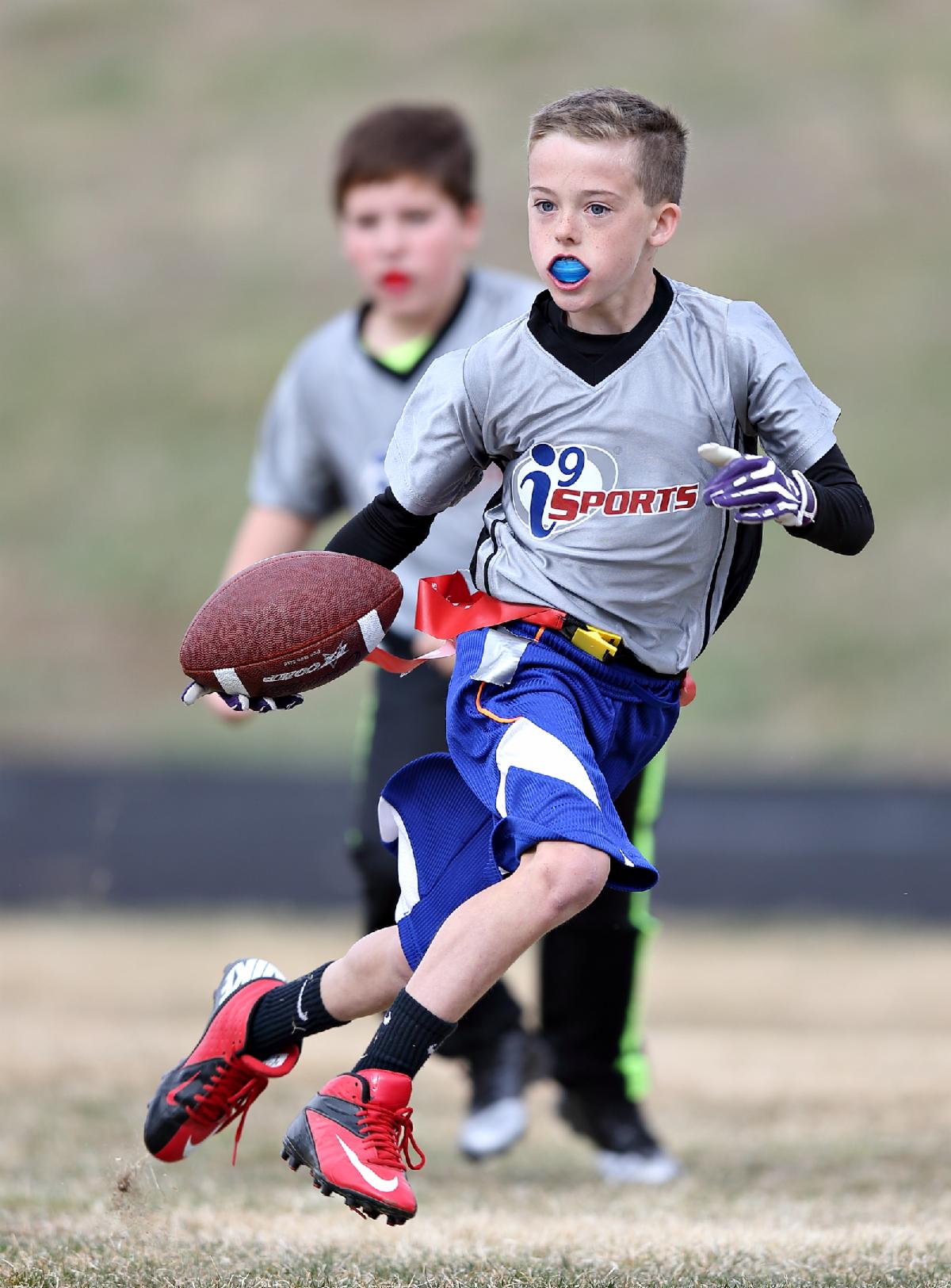
Instead, coaches can teach players to:
- Stay balanced.
- Approach under control.
- Keep their eyes on the runner.
- Use their hands to grab the flag.
- Avoid launching themselves toward the legs.
For more defensive technique, see the flag-pulling technique guide.
6. Pay Attention to the Field
Even the best technique can’t compensate for a dangerous playing surface.
Before practice or a game, coaches should look for:
- Holes or uneven ground
- Standing water
- Loose debris
- Broken glass or sharp objects
- Damaged turf
- Obstacles near the playing area
- Unsafe sideline conditions
It’s tempting to think, “It’s only a little hole.”
Your child’s ankle may have a completely different opinion.
Good field inspection is especially important after storms or when playing on unfamiliar fields.
Parents and coaches can use the flag football rules guide to understand how proper field setup and play structure fit together.
7. Take Heat, Sun and Hydration Seriously
Heat is one of the easiest risks to underestimate.
A child may be having so much fun that they don’t realize they’re becoming overheated.
Signs such as unusual fatigue, dizziness, headache, weakness, nausea or confusion should never be brushed aside.
USA Football’s health and safety resources specifically include heat and hydration guidance designed to help youth programs adjust practice conditions, support acclimatization and recognize heat-related illness.
Parents should make sure children arrive with water and have regular opportunities to drink.
You can also read Youth Flag Football HQ’s youth flag football hydration guide.
On Very Hot Days
Coaches may need to shorten practices, add more breaks or adjust the intensity and timing of activities according to local conditions and league policy.
There is nothing heroic about making a child run through dangerous heat just because the practice schedule says 5 p.m.
8. Don’t Ignore a Possible Concussion
This is one of the most important parts of the article.
A concussion can happen after a bump, blow or jolt to the head or body. It does not always look dramatic, and symptoms may not appear immediately.
The CDC advises that if a concussion is suspected, the athlete should be removed from sports participation immediately and should not return the same day or return to play until cleared by a healthcare provider.
Possible symptoms include:
- Headache
- Dizziness
- Confusion
- Balance problems
- Difficulty concentrating
- Memory problems
- Nausea or vomiting
- Unusual behavior or mood changes
- Feeling slowed down or “foggy”
For younger children, signs may also include unusual irritability, changes in sleep, reduced interest in normal activities or appearing more clumsy than usual.
The CDC’s HEADS UP signs and symptoms guide provides a detailed checklist for parents and coaches.
9. Know the Emergency Warning Signs
Most sports injuries do not require an ambulance.
But parents and coaches should know when a situation is more serious.
After a possible head injury, emergency warning signs can include things such as worsening headache, repeated vomiting, increasing confusion, unusual difficulty waking, seizures, weakness or other significant changes.
The CDC recommends emergency medical attention for concussion danger signs.
Don’t try to diagnose the severity of a head injury from the sideline.
When you’re dealing with a potentially serious head injury, “Let’s see how he feels after another play” is not a good plan.
Read the CDC’s official guidance on responding to sports-related concussion.
10. Never Encourage a Child to “Walk It Off”
This is an old sports phrase that belongs in the museum.
Kids sometimes want to keep playing because they don’t want to disappoint their teammates.
Parents and coaches need to make it completely acceptable to report pain.
A player who says, “My ankle hurts,” should not hear:
“You’re fine. Get back out there.”
Instead, stop and assess the situation appropriately.
Not every ache is a serious injury, but you won’t know that by pretending it doesn’t exist.
Youth Flag Football HQ’s injury guidance makes the same basic point: continuing to play through an injury can make the problem worse and delay recovery.
For more parent-focused advice, visit the site’s parent resource center.
11. Build a Culture Where Safety Comes Before Winning
This may be the most important rule of all.
A six-year-old does not need a coach screaming about toughness.
They need a coach who teaches them that smart athletes:
- Listen to instructions.
- Respect teammates.
- Use proper technique.
- Drink water.
- Take breaks when necessary.
- Speak up when something hurts.
- Follow the rules.
That culture doesn’t make kids soft.
It makes them smarter competitors.
USA Football’s current youth coach training emphasizes athlete well-being, health and safety alongside football fundamentals and coaching skills.
Coaches can explore the USA Football Youth Coach Course for current educational resources.
What Should Parents Keep in the Sports Bag?

A little preparation can save a lot of stress.
A practical youth flag football bag may include:
- Water bottle
- League-approved mouthguard
- Extra socks
- Backup flag belt if permitted
- Sunscreen
- Small towel
- Weather-appropriate clothing
- Basic first-aid supplies
- Emergency contact information
NFL FLAG’s equipment checklist also includes a mouthguard, water bottle, athletic bag, socks and cleats among basic football equipment.
For equipment specifics, see our 3 must-have youth flag football equipment guide.
What Should Coaches Keep on the Field?
A well-prepared coach should know more than just the playbook.
At minimum, the coaching setup should account for:
- First-aid supplies
- Water access
- Emergency contacts
- Field hazards
- Weather conditions
- Player medical information as appropriate
- Emergency action procedures
USA Football currently provides resources for emergency action planning, heat and hydration, concussion response and sudden cardiac arrest preparedness.
A good coach doesn’t expect an emergency to happen.
A good coach is simply prepared in case it does.
How to Make Youth Flag Football Safer Without Making It Boring
This is where great coaching makes a difference.
Safety doesn’t have to mean stopping practice every four minutes for a lecture.
Build safety into the activities.
Use Games to Teach Flag Pulling
Turn proper flag pulling into a small competitive drill.
Use Reaction Games for Movement
Teach players to stop, change direction and react to cues.
Make Hydration Part of the Routine
Don’t wait until a child says they’re thirsty. Build water breaks into practice.
Practice Emergency Procedures
Coaches should know who contacts parents, where emergency supplies are and how to get help quickly.
Youth Flag Football HQ’s youth flag football playbook can help coaches keep practices organized so that safety routines don’t disappear when the session gets busy.
Why Parents Should Let Kids Play
Safety is important.
Fear is not.
Parents can become so worried about sports injuries that they accidentally turn every practice into a risk assessment meeting.
That’s not what children need.
They need an opportunity to run, learn, compete, make friends and have fun.
The goal of injury prevention isn’t to eliminate every possible bump or scrape from childhood.
That’s impossible.
The goal is to reduce avoidable risks while giving children a positive environment in which to play.
USA Football describes flag football as a non-contact game type and promotes it as a way for athletes to learn foundational football skills in an accessible setting.
That makes good safety habits especially valuable because children can learn them early and carry them into other sports.
Frequently Asked Questions
Is youth flag football completely safe?
No sport is completely risk-free. Flag football is designed as a non-contact form of football, but children can still fall, collide, suffer sprains or experience head injuries and heat-related illness.
What is the best way to prevent youth flag football injuries?
Use appropriate equipment, choose a well-run league, teach proper movement and flag-pulling technique, warm up before activity, monitor weather conditions, keep athletes hydrated and respond promptly when a player reports pain or possible concussion symptoms.
Should kids wear mouthguards in flag football?
Requirements vary by league, but mouthguards are commonly included in youth football equipment guidance. Parents should follow their league’s current rules and choose an appropriately fitted guard.
Should children stretch before flag football?
A dynamic warm-up involving light movement, jogging and sport-specific actions is a practical way to prepare for activity. Coaches can then include appropriate mobility exercises as part of the warm-up routine.
What should I do if my child might have a concussion?
Remove the child from play immediately and seek appropriate medical evaluation. The CDC advises that athletes with a suspected concussion should not return to sports the same day and should return only after healthcare-provider clearance.
Can a child play through an ankle injury?
Don’t encourage a child to ignore significant pain. Stop activity and have the injury assessed appropriately. Continuing to play can sometimes make an injury worse.
How often should kids drink water during flag football?
There isn’t one exact amount that suits every athlete or weather condition. Water should be readily available, and coaches should schedule regular drink breaks, especially in hot conditions.
What should a coach do on extremely hot days?
Coaches should follow their league’s heat policies, monitor conditions, provide regular hydration breaks and adjust practice duration or intensity when appropriate. USA Football provides specific heat and hydration resources for youth programs.
Is diving for flags dangerous?
Diving can increase the chance of awkward falls and unnecessary contact. Youth Flag Football HQ’s defensive teaching emphasizes staying on your feet and using positioning and controlled flag-pulling technique.
What should parents ask a youth flag football league before registering?
Ask about coach training, supervision, required equipment, concussion policies, heat policies, emergency procedures and how injuries are managed during practices and games.
Final Safety Checklist for Parents and Coaches
Before your child steps onto the field, run through this quick checklist:
- Is the field safe?
- Does the child have the required equipment?
- Does the mouthguard fit?
- Are the cleats appropriate?
- Has the player warmed up?
- Is water available?
- Is the weather appropriate for play?
- Does the coach know the emergency procedure?
- Does the child know that reporting pain is okay?
- Does everyone understand the no-diving and safe flag-pulling expectations?
If the answer to all ten is yes, you’re starting from a much better place.
Final Thoughts: Let Them Play, But Let Them Play Smart
The best youth flag football safety strategy isn’t complicated.
It starts with preparation.
Choose a responsible league.
Give children appropriate equipment.
Teach them how to move and pull flags safely.
Warm them up.
Keep them hydrated.
Watch the weather.
Pay attention to the field.
And never dismiss an injury just because the game is exciting.
Most importantly, create an environment where young athletes know that speaking up about pain or feeling unwell is a smart decision, not a weakness.
That’s how you build athletes who are not only better at flag football but also better at taking care of themselves.
And yes, they’ll still run around like little rockets.
That’s part of the fun.
The objective isn’t to take the fun out of youth sports.
It’s to make sure the fun lasts long enough for them to keep coming back.
More Youth Flag Football Safety & Coaching Resources
Parents can explore the Youth Flag Football HQ parent resources for rules, positions, terminology, equipment and safety articles.
Coaches can use the youth flag football drills collection to build practices around movement, skills and fun.
For beginner players, see the basic flag football skills guide.
For more advanced practice ideas, explore the advanced flag football drill guide.
Coaches can also use the youth flag football playbook to keep practices structured and organized.
For game-based practice, check out the flag football games for kids.
And before the season begins, don’t forget the youth flag football preseason equipment checklist.
Safety disclaimer: This article provides general educational information and is not a substitute for medical advice, professional athletic training or your league’s official safety policies. When a serious injury or possible concussion occurs, follow your organization’s emergency procedures and seek appropriate medical care. For current concussion guidance, consult the CDC HEADS UP resources and a qualified healthcare professional.